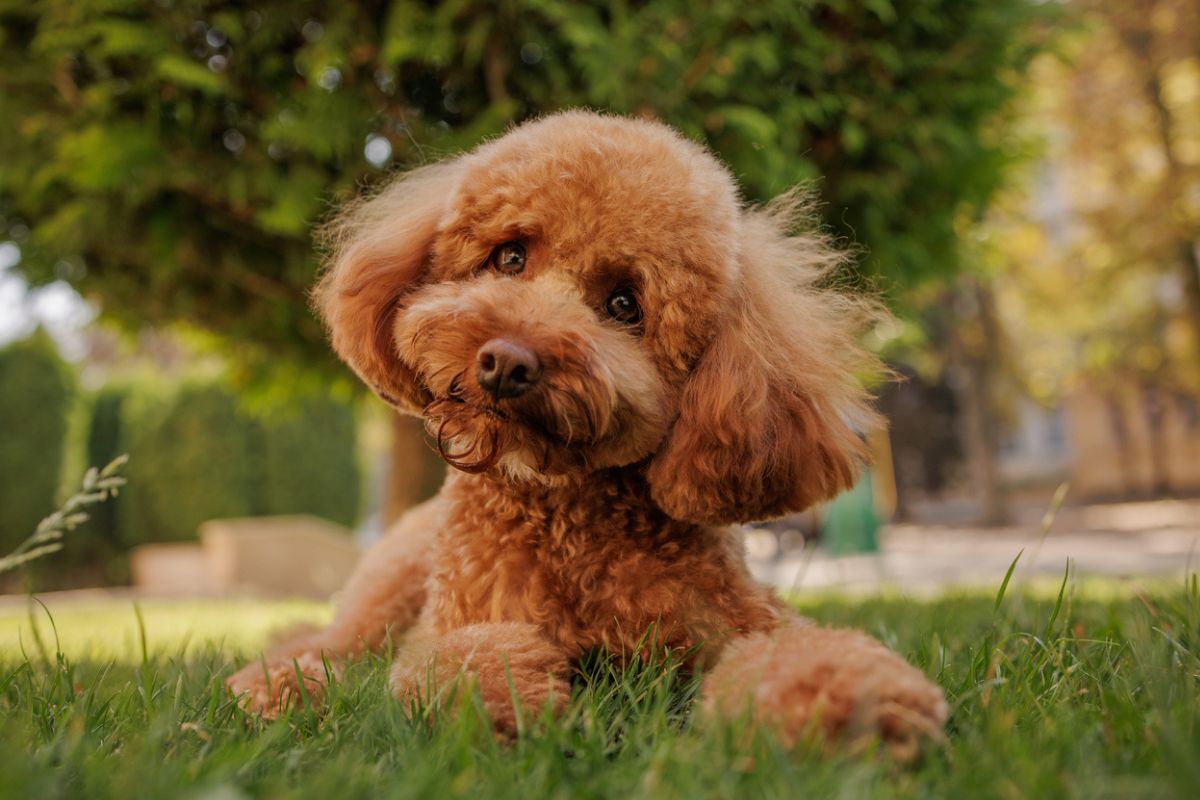
Energetic, affectionate and a fan of cuddles, Cavoodles are the perfect family-friendly dog, but don’t let their size fool you, they still need plenty of regular exercise and mental stimulation.
Personality and temperament
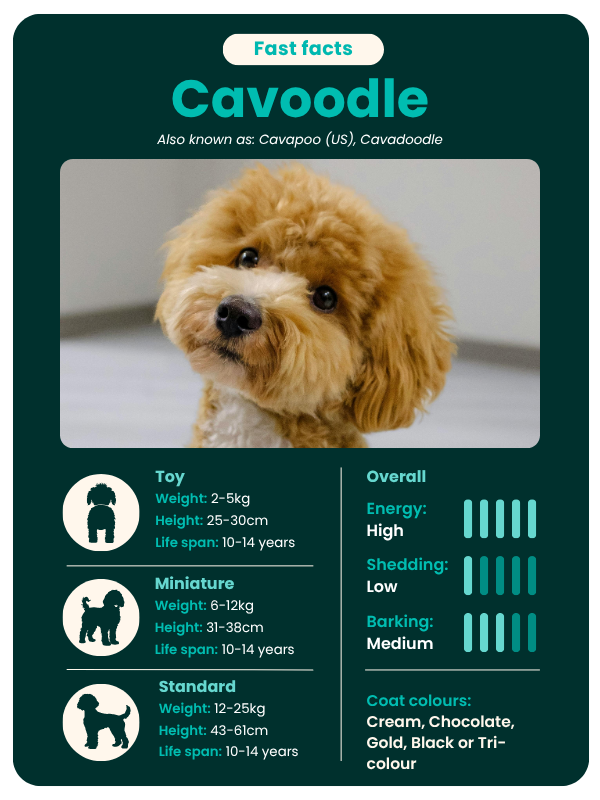
Affectionate and gentle-natured, Cavoodles love being around people and can suffer from separation anxiety if left alone for too long. These gentle animals tend to be curious and eager to please and have even been used as therapy dogs due to their sensitive, caring personalities. While they may bark at strangers (and other random noises), Cavoodles are generally very friendly and are more of a welcoming committee than a protective guard dog.
Size and appearance
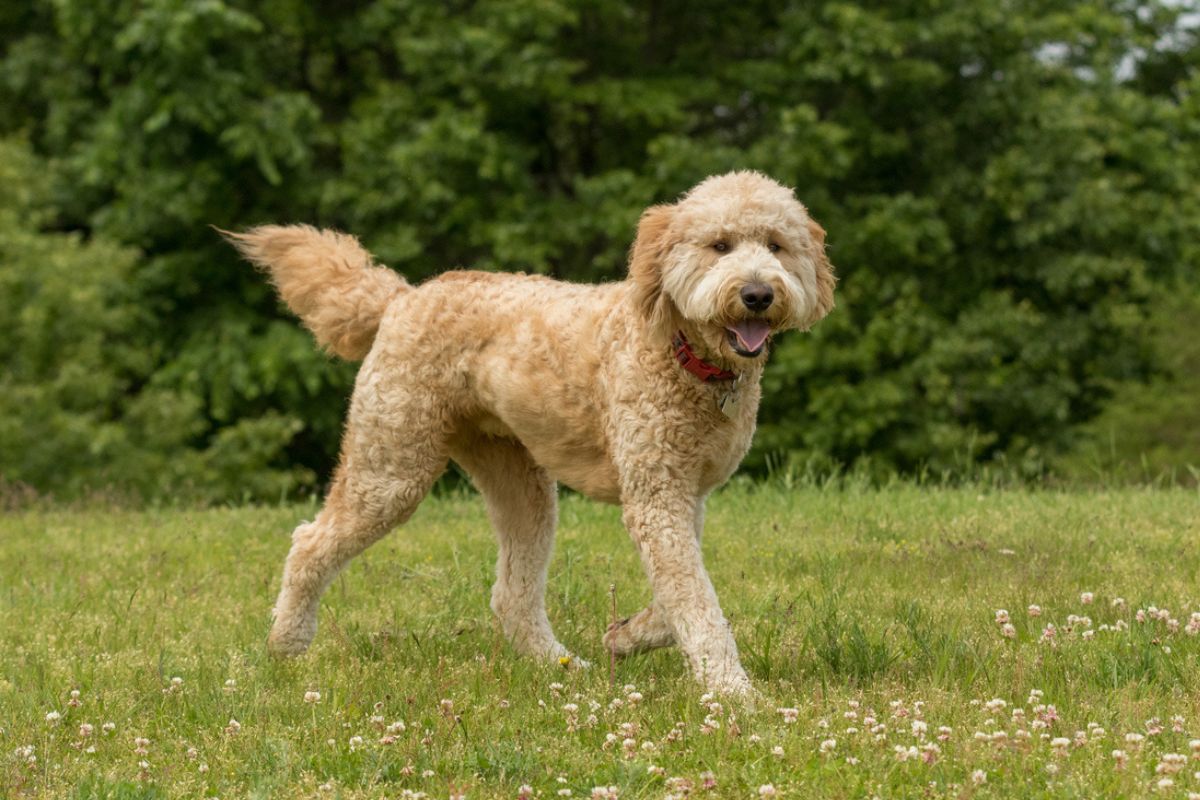
Cavoodles come in two main sizes: Toy and Miniature. Depending on the size of the Poodle parent, they typically weigh between 5–12kg and stand up to 35cm tall. Their adorable faces have compact features, friendly eyes and floppy ears, while their coats can vary from soft waves to tight curls and come in a variety of colours, including cream, gold, chocolate, black and tri-colour. As Cavoodles age, their coat colour can fade. This is due to a progressive fading gene – also known as the ‘dilute’ gene – inherited from the poodle parent.
History
A cross between the Cavalier King Charles Spaniel and a Toy or Mini poodle, Cavoodles have a royal past. Cavalier King Charles Spaniels are the descendants of a small toy spaniel popular for warming the laps of nobility in drafty castles and on long carriage rides in 16th century Europe. Poodles add a touch of intelligence to the breed as well as low-shedding fur, making Cavoodles both clever and cuddly.
Health conditions that can affect this breed
Cavoodles are typically healthy, but can be prone to:
- Mitral valve disease (a heart condition)
- Patellar luxation (dislocating kneecap)
- Eye conditions (like cataracts or progressive retinal atrophy)
- Epilepsy
- Dental issues (like tooth decay, overcrowding and dental disease)
- Separation anxiety
Regular vet check-ups and a healthy lifestyle will help minimise risks.
Food and exercise
Despite their small size, Cavoodles need a high-quality, balanced diet rich in protein, fats and carbohydrates. If you’re choosing kibble, opt for one designed for small breeds to suit their small mouths.
Cavoodles may love the couch (and your lap), but they still need up to an hour of daily exercise to stay healthy and happy. Without it, they can show disruptive behaviours like chewing on your most expensive shoes and barking at just about everything.
Grooming and maintenance
Cavoodles are low-shedding, so they won’t leave much fur around the house, but their grooming requirements put them in the high-maintenance category. To keep them happy and healthy, you will need to commit to brushing several times a week and a regular appointment at the groomers every couple of months.
- Bathe: every 4-6 weeks
- Professional groom: every 6–8 weeks
How to groom a Cavoodle
- Fur: brush 3–4 times a week to prevent matting
- Nails: trim every 4 weeks
- Ears: clean weekly to remove wax and hair build up
- Eyes: wipe regularly to prevent tear stains
Training and space requirements
While Cavoodles do have an independent streak, they are also intelligent and eager to learn. When it comes to training, consistency and positive reinforcement from a young age is key.
This sweet breed is suited to a range of spaces from smaller apartments to larger homes thanks to their adaptable nature, as long as they get enough daily exercise and mental stimulation. Most of all, they need time with their people.
Best suited for…
Cavoodles are the ultimate family dog. They are affectionate, great with children and, providing they get plenty of exercise and cuddles, they can adapt to most living situations. Just make sure you get friendly with your local dog groomer – you’ll be spending plenty of time there.