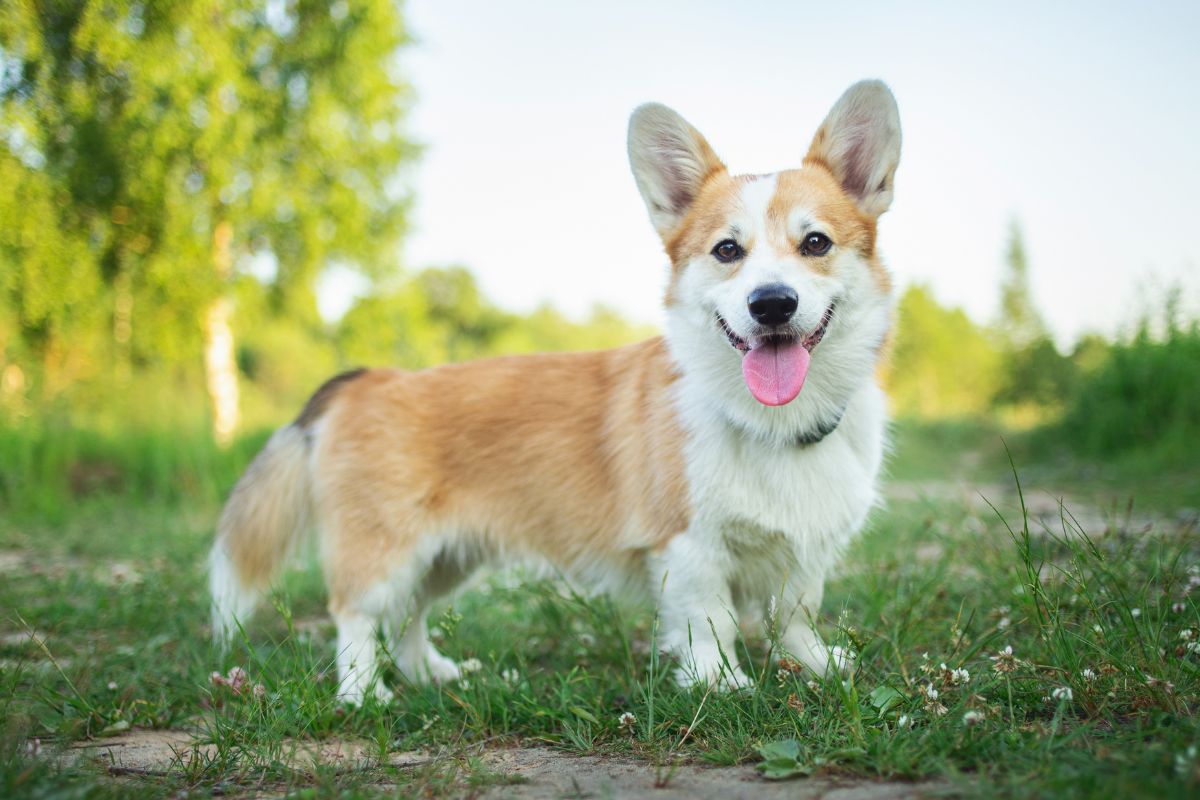
Small but mighty, Corgis are pint-sized, lovable pups who are surprisingly agile and active. They can make great family members for first-time owners and families.
Personality and temperament
Pembroke Welsh Corgis are mighty…in their own heads and are often described as a ‘big dog trapped in a small dog’s body’. They’re alert, active and highly adaptable dogs, who are playful, friendly and love being the centre of attention – always. Corgis are up for just about any adventure, making them a great family pet, but they equally love having their own personal space at home. Be warned, this herding dog is generally great with children, but they might try herding smaller toddlers if given the chance. They also make loud guard dogs and will happily announce visitors (or just anyone walking past the house).
Size and appearance
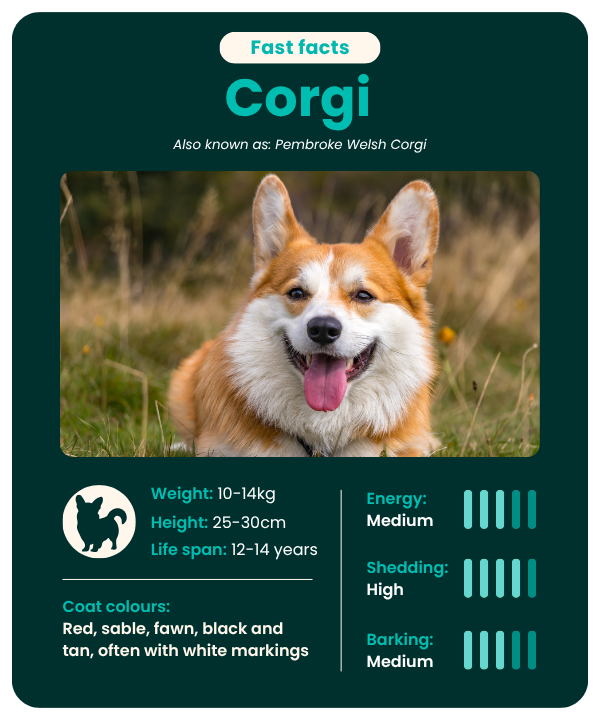
A small-to-medium sized pooch, Corgis typically don’t grow taller than about 30cm. They have stubby legs and a long body, with a cute fox-like face and large pointed ears, and usually have docked tails. Their double coat has a rough top layer and a thick, waterproof under layer, which means they do shed quite a bit throughout the year. Corgis sport a fetching ‘saddle’ design on their fur and come in red, sable (dark brown), fawn, black and tan.
History
Dating back to the 10th century, Corgis were the original all-round farm dog in Wales. They were used to herd animals, catch rats, guard livestock and protect farmers and their families. They were valued for their sharp intelligence and eagerness to listen and respond to their owners and by the 1850s, Corgis could be found on just about every Welsh farm. However, by the 1900s they had transitioned to loyal companion dogs and were no longer roaming the pastures. Queen Elizabeth II was famously a fan of the breed owning over 30 Corgis in her lifetime!
Health conditions that can affect this breed
Although Corgis are generally a heathy breed, they are prone to several health issues. Some of the most common conditions to look out for include:
- Back issues, mainly Intervertebral disc disease, also known as IVDD, (spinal disc problems due to their long backs and short legs). Suspected back problems should be examined by a vet immediately.
- Degenerative myelopathy (progressive spinal cord disease)
- Hip dysplasia (where the hip joints don’t form properly)
- Inherited eye diseases, including progressive vision loss
- Patellar luxation (dislocating kneecap)
- Obesity: extra weight can put pressure on their already vulnerable spine which can increase the chance of back problems.
Regular vet check-ups and constant care can help manage these conditions and keep your Corgi healthy.
Food and exercise
As they are prone to obesity, it’s important that Corgis are fed a balanced diet that meets their nutritional needs. Lots of lean protein like chicken and fish, healthy fats, and essential vitamins and minerals to support their specific health concerns. Keep an eye on your pup’s weight as it can impact their back and joint health. Treats can be used for training purposes but should be limited – if you can resist their cute little faces.
Corgis love their exercise and are surprisingly agile despite their size. They thrive on at least 60 minutes of exercise every day, including long walks and hiking, though their short little legs can’t keep up with running or cycling. They also love having a ‘job’ to do, so things like agility, herding and obedience are right up their alley.
Grooming and maintenance
Corgis have a dense double coat that sheds year-round and heavily during seasonal changes. They also have a long back, so gentle handling is essential.
- Bathe: every 6-8 weeks
- Top-coat groom: brush 2-3 times a week
- Professional groom: can be beneficial during spring and autumn shedding seasons, particularly if fur is matted
How to groom your Corgi
- Fur: brush with a slicker brush and undercoat rake
- Nails: trim every 3-4 weeks
- Ears: clean weekly
- Eyes: wipe gently if needed
- Back: avoid rough handling or excessive bending
Training and space requirements
Being a herding dog, Corgis are alert, curious and highly intelligent. They’re easy to train and are keen to learn tricks but as with other breeds, early socialisation and positive reward-based puppy training works best.
A fenced backyard is ideal for these powder kegs of energy, but they can thrive in smaller houses and apartments if they have ample exercise and mental stimulation.
Best suited for…
Energetic playmates! Corgis are playful athletes and well suited for any family or owner that is looking for a ball of energy to dominate their home. Despite their working dog background, they can be a great pup for first-time owners who have the time and energy to devote to their training and health needs.