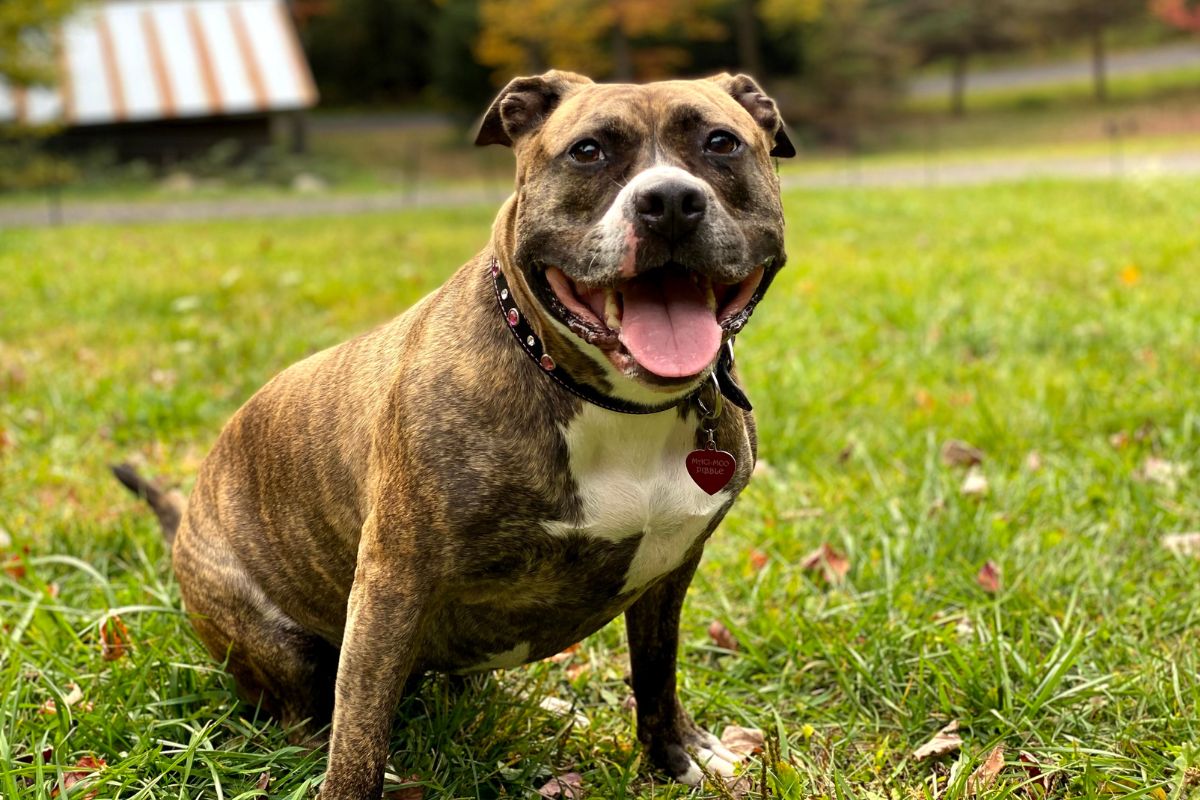
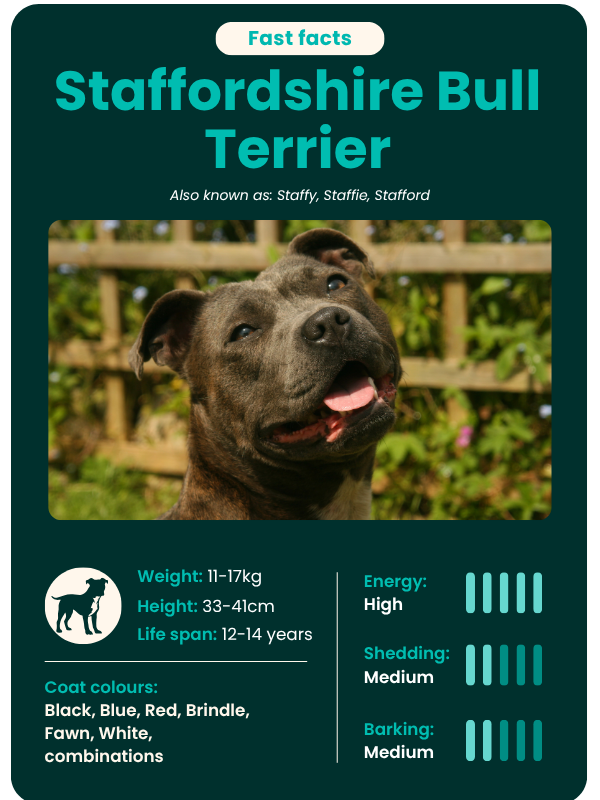
Staffordshire Bull Terriers are loveable goofballs who are always up for tummy pats and couch cuddles. Their gentle, loyal nature makes them a popular breed that’ll quickly become part of your family.
Personality and temperament
Staffordshire Bull Terriers are playful, full of enthusiasm and up for anything as long as it involves tummy pats. Generally full of curiosity and bravery, they’re also very loyal to their human pack, especially children, and the love wrestling, chewing toys and playing with their owners. However, they tend to ‘play hard’ and can be excitable.
Size and appearance
A medium-sized dog, Staffies have stocky, muscly bodies, with a head that can open closed doors with ease and a ‘Staffie grin’ that’s infectious. Sporting a compact frame, this lovable breed is strong and athletic with pronounced cheeks, alert ears and big welcoming eyes. Their short fur lies close to the skin and thins towards their tummies, and they come in a number of colours including black, blue, red, brindle, fawn and white.
History
Staffordshire Bull Terriers have a traumatic history as they are descended from dogs used for bull and bear baiting in England in the 1600s, then a couple of centuries later they were used in dog fights. However, it’s important to note this gentle soul has always been bred to be caring and loyal towards their humans. Today, Staffies are popular family pets in Australia and are trained as emotional support animals and therapy dogs.
Health conditions that can affect this breed
Staffordshire Bull Terriers are generally healthy, energetic dogs but may be prone to:
- Hip and elbow dysplasia (hip or elbow joints don’t form properly)
- L-2-HGA (an inherited neurological disorder)
- Mange (especially in pups)
- Luxating patella
Regular check-ups and early diagnosis can help prevent and manage these conditions.
Food and exercise
Staffies need high-protein meals, like beef, chicken, turkey, lamb and duck, as well as salmon and eggs to help with any skin allergies. As naturally athletic dogs with bucketloads of energy, Staffies love walking, interactive play and even running and hiking. They need at least an hour to 90 minutes of exercise a day to wear them out, as well as a mental stimulation, like puzzle solving, scent games and treat-led play.
Grooming and maintenance
The Staffy has short fur that sticks close to the skin and is considered a low-maintenance breed.
- Bathe: every 6–8 weeks, or as needed
How to groom a Staffy
- Fur: brush weekly with a rubber grooming mitt
- Nails: trim every 4 weeks
- Ears: wipe weekly, check for signs of irritation
- Eyes: clean gently as needed
Training and space requirements
Intelligent and naturally curious, Staffies are relatively easy to train as they pick up skills quickly and are eager to please. Consistent, fun training techniques that include socialisation work best with this independent breed. While they generally don’t start fights, they will rarely back down from one, so dog parks should be visited with care.
Staffordshire Bull Terriers are adaptable and can live in smaller spaces if they are given enough physical exercise and mental stimulation and aren’t left alone for too long. They have been known to be escape artists, so gardens with high fences are a plus.
Best suited for…
Staffies are best suited to active households with time to devote to training and cuddles. While experienced dog owners may be better equipped to train these adorable muscle heads, Staffies make affectionate additions to any family.