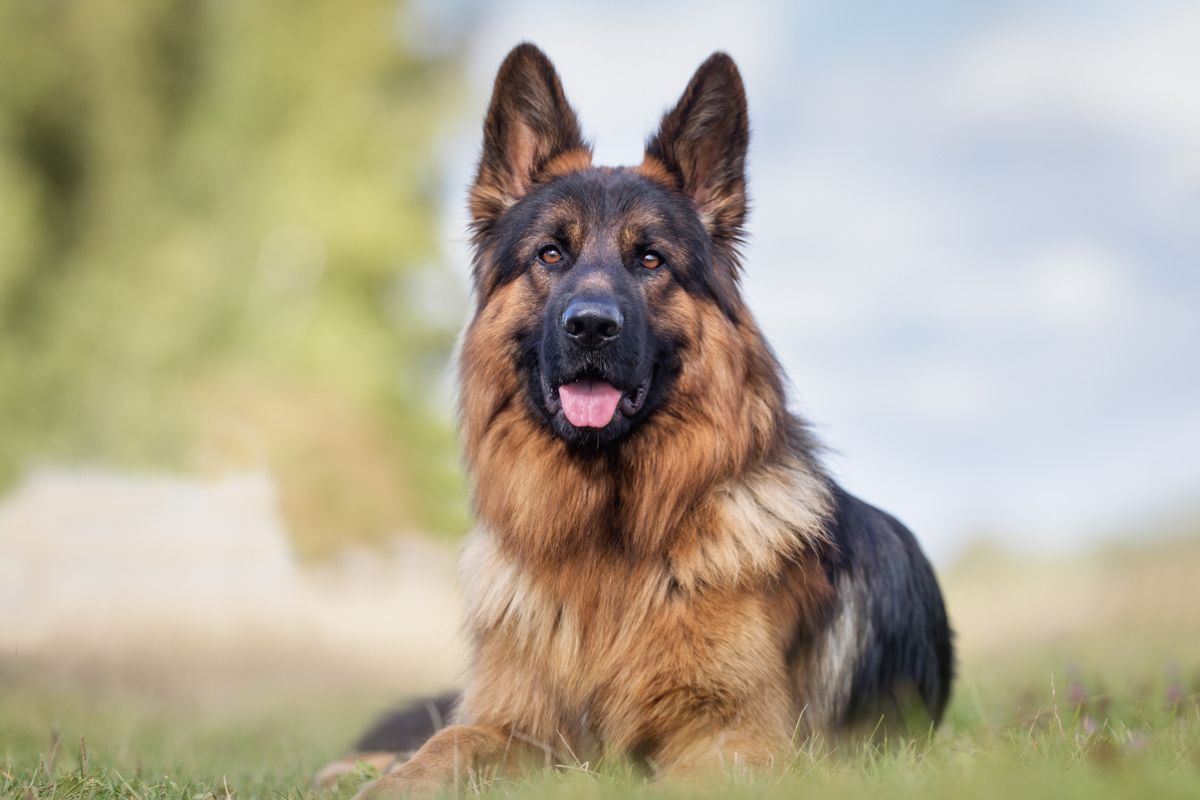
Agile and fiercely loyal, German Shepherds are large, muscular dogs that make gentle family pets. They love having a job to do and can be reliable guard dogs with the right training.
Personality and temperament
German Shepherds are highly intelligent, athletic and confident dogs, that love being given a job or responsibly. Known for being trainable and obedient, this breed is cautious with strangers, so socialisation from an early age is important. Despite their commanding nature and strength, German Shepherds love being around their humans and can suffer from separation anxiety if left alone for too long.
Size and appearance
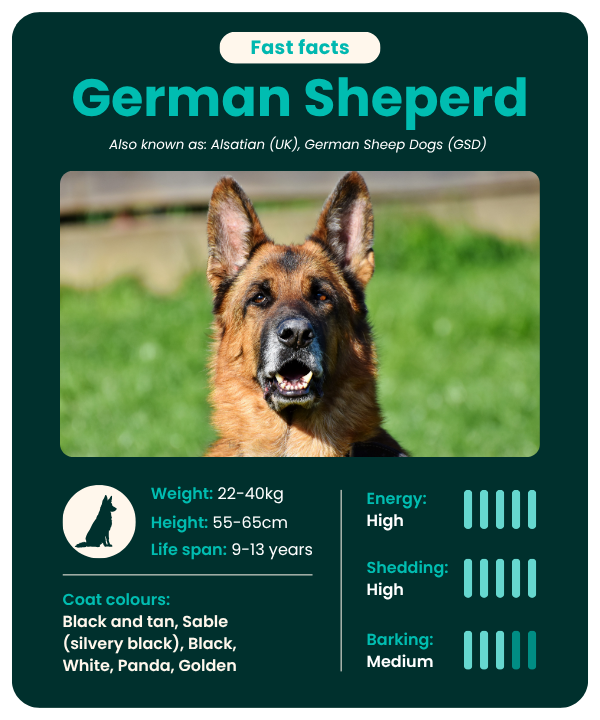
A large breed, German Shepherds can weigh up for 40kg and stand as tall as 65cm. Their muscular appearance and general alertness can make them seem intimidating but when trained well they make great companions. Their colourings are generally black and tan, sable (silvery black), and solid black, though they can come in white, panda (tri-coloured) and golden. Their alert, ‘standing to attention’ ears are famously floppy as puppies but tend to straighten at about six months, while their long straight muzzle is usually paired with a rather intense stare.
History
As the name suggests, the Deutsche Schäferhund (German Shepherd Dog) originated in Germany in the 1800s. Originally bred for sheep herding, German Shepherds were soon recognised for their intelligence and strength, and were used as guard dogs, messengers and even rescue dogs on the battlefield. Today they continue to be a popular choice as a working dog, serving in the police, military, search and rescue, and guide dog services.
Health conditions that can affect this breed
German Shepherds, like many large breeds, they can be prone to some health issues, including:
- Hip and elbow dysplasia (where hip or elbow joints don’t form properly. You can reduce the risk of this by selecting a reputable breeder and through good diet and plenty of exercise.)
- Degenerative Myelopathy (progressive spinal cord disease)
- Gastric dilatation-volvulus (bloating – also known as ‘bloat’)
- Heart disease
- Panosteitis (inflammation of the bones)
Regular check-ups and early diagnosis can help prevent and manage these conditions.
Food and exercise
Looking for a running buddy? Look no further. German Shepherds are an active breed and need at least two hours a day of walks, playtime and training to keep their minds and bodies busy. Due to their large frames and muscular bodies, German Shepherds need to consume a healthy amount of protein and fat to ensure their energy levels are met. This breed can also be sensitive to bloating so easily digested proteins are the best, such as chicken, turkey, salmon and rabbit. Feeding smaller meals more frequently may also help reduce the risk of bloat.
Grooming and maintenance
German Shepherds have a thick, double coat that regularly sheds.
- Bathe: every 6-8 weeks
- Professional groom: can be beneficial during spring and autumn shedding seasons, particularly if fur is matted
How to groom a German Shepherd
- Fur: brush weekly (more during shedding seasons) using an undercoat rake to remove any loose fur.
- Nails: trim every 4 weeks
- Ears: clean weekly to prevent infections
- Eyes: check and clean gently as needed
Training and space requirements
This breed, in particular, loves the challenges of training and will thrive with constant, confident teaching from experienced dog owners. Best trained from an early age in order to keep their protective instincts in check, German Shepherds also need regular socialisation with other dogs to make sure they can make friends as adults.
Ideally, this breed needs a medium to large backyard that is fully fenced. They are generally not suited to small apartment living.
Best suited for…
German Shepherds are loyal, loving and happiest when they have a job to do. They suit active families, experienced dog owners or households that have a medium to large backyard and can commit time to training and exercise.