Proud and brave, Rottweilers are strong, intelligent dogs whose instincts are to protect their owners. They make loyal pets and are suitable for families but can be a handful for first-time dog owners.
Personality and temperament
With strong protective tendencies and a large, muscular body, you’ll always feel safe with a Rottie in the house. However, despite being labelled as aggressive in the past, this breed is generally a calm, gentle dog. Playful as a puppy, Rottweilers can grow up to be more serious and reserved, preferring to follow their owners around the house in search of cuddles.
Size and appearance
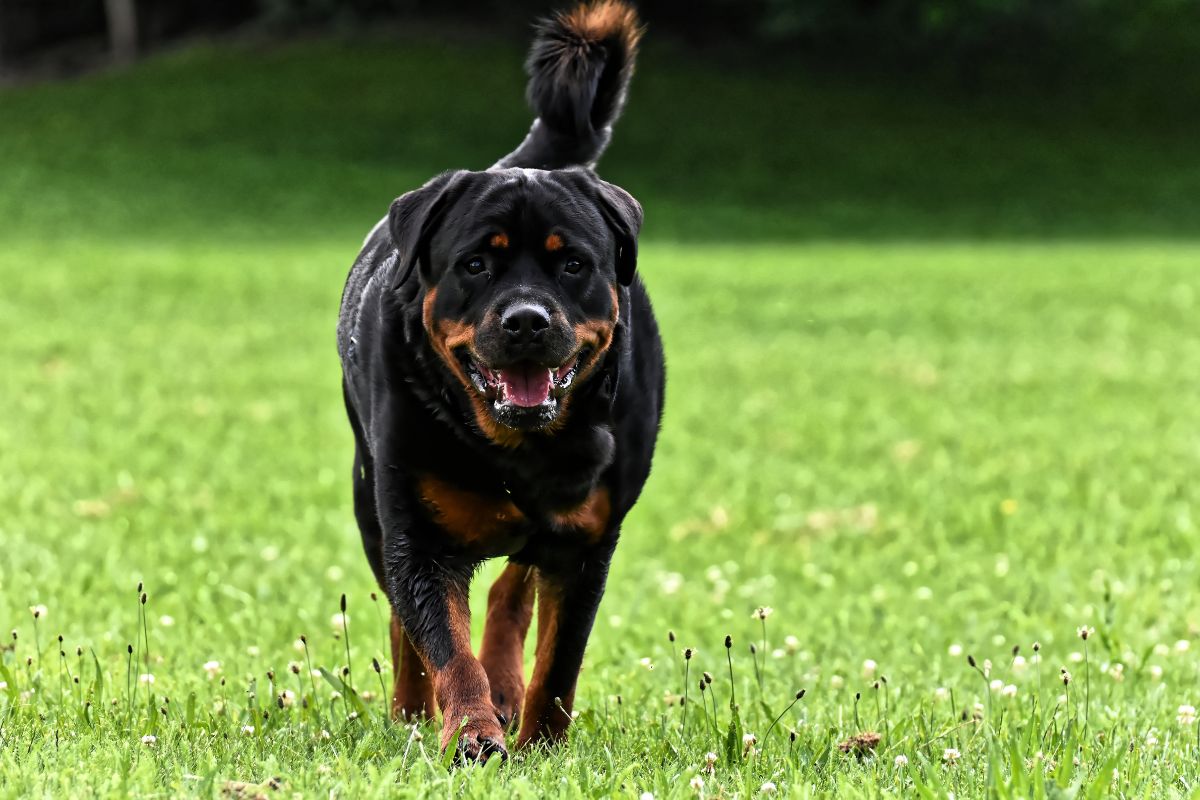
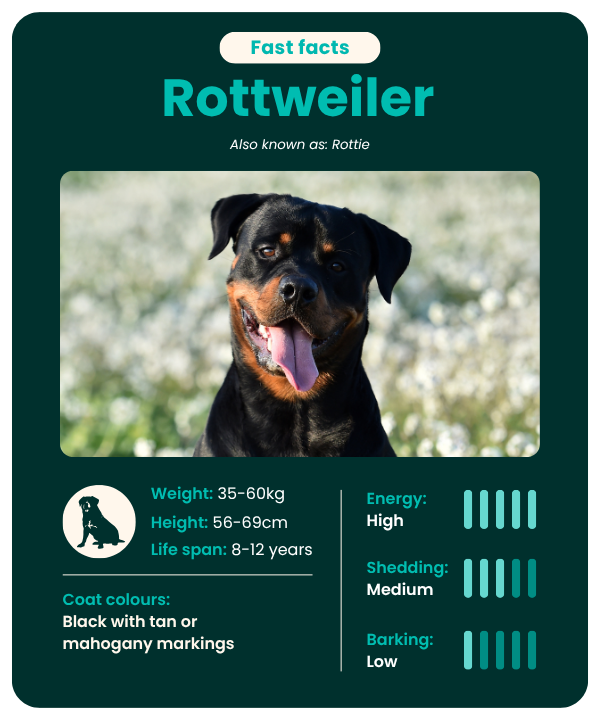
Rotties are a powerful breed who can weigh up to around 59kg and grow as tall as 69cm. They have a stocky build, large heads, floppy ears, inviting almond-shaped eyes and a muscular neck most weightlifters would envy. Their thick, coarse fur is largely black, trimmed with a rich caramel colouring that makes their broad chest perfect for ‘big dog’ pats. Just be aware that Rotties with larger lips can be drooling machines.
History
This resilient breed dates back to Roman times, when ancient mastiffs would accompany Roman legions as they conquered the known world. These hounds, which were later refined through breeding in Germany to be Rottweilers, were used to herd cattle and protect livestock. Designed to be working dogs, their hard-working nature, loyalty and confidence is prized today in their roles as police, military, search and rescue, and service dogs.
Health conditions that can affect this breed
Rottweilers are strong, powerful dogs but can be prone to:
- Hip and elbow dysplasia (where hip or elbow joints don’t form properly. You can reduce the risk of this by selecting a reputable breeder and through good diet and plenty of exercise.)
- Osteosarcoma (bone cancer)
- Aortic stenosis (heart condition)
- Gastric dilatation-volvulus (bloating – also known as ‘bloat’)
- Cruciate ligament injuries
Regular check-ups and early diagnosis can help prevent and manage these conditions.
Food and exercise
Rottweilers have a tendency for bloating so it’s best to feed them nutritious, high-protein meals twice a day using an elevated, slow-feeder bowl and avoid exercising straight after eating. It’s important to keep their weight down to protect their joint health, so watch those treats.
Rotties need a lot of exercise, so you’ll need to put aside up to two hours a day for walks, hikes and training. They also enjoy less intense workouts as long as they also get enough mental stimulation. Just make sure any toys you give your Rottie are tough – these guys are superheroes at chewing.
Grooming and maintenance
Rottweilers have short, thick fur that will shed, so they require regular grooming to help maintain it.
- Bathe: every 6–8 weeks
- Professional groom: not needed
How to groom a Rottweiler
- Fur: use a bristle brush or grooming glove weekly
- Nails: trim every 4 weeks
- Ears: clean weekly to prevent infections
- Eyes: clean with damp cloth as needed
Training and space requirements
Though Rottweilers are eager to please and intelligent, training one requires mental and physical strength – they can be a challenge for first-time dog owners. Early socialisation and firm, consistent training is the key.
Due to their bulkiness, Rottweilers need a lot of space even when they’re getting enough exercise and they will be happiest in medium to large homes with high-fenced backyards.
Best suited for…
A natural protector, Rottweilers can make great family pets with strong, consistent training, but are best suited for experienced dog owners who have the time (and energy) to invest in training.