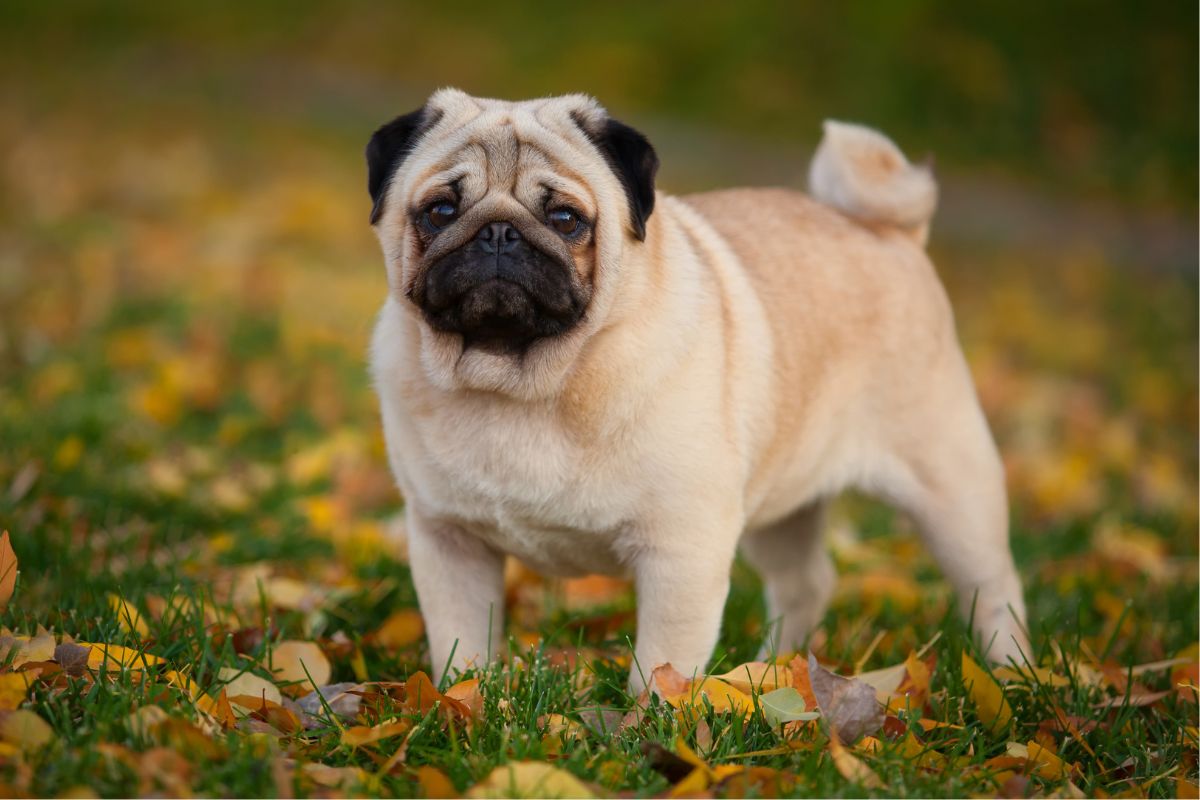
The ultimate lap warmer, Pugs are a lively but even-tempered breed whose sole purpose in life is to hang around its owners and make them pat them.
Personality and temperament
It’s hard to find fault with this people-pleasing pooch; Pugs are playful without being comedic, loving without being clingy, and happy without being hyperactive. They love nothing more than being wherever their human ‘pack’ is, and dislike being left alone, especially as they can be a little mischievous. They can be a good choice for first-time dog owners as they are relatively low-maintenance pups.
Size and appearance
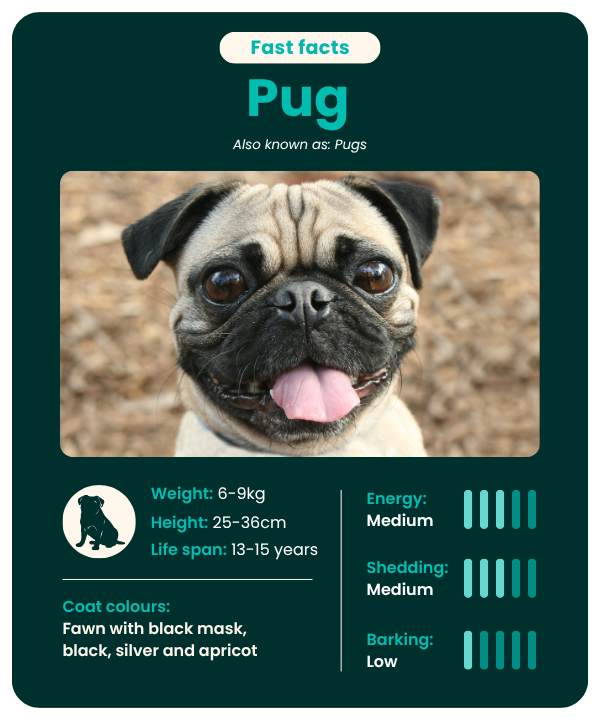
Pugs are a small dog breed with a height of around 36cm and a weight of around 6-9kg – just perfect to fit on your lap. Their stocky little bodies are very huggable with short fur, floppy ears and a curled-up tail. Their squashy faces, complete with ‘worry’ wrinkles and big eyes are a much-loved aspect of the breed, though the short nose can lead to breathing issues and they are prone to overheating. The two most common fur colours are fawn and black, with a black face, though silver and apricot can also be found.
History
Talk about a dog with a back story! These clever pups have been bred to warm the laps of royalty since the Han Dynasty in China (around 200AD) and they are even thought to be related to the Tibetan Mastiff earlier than that. Little Pugs were traded with Europeans in the 1500s and they were also adopted by the royalty of the time, including Marie Antoinette. They arrived on our shores in the 1870s and have been a popular choice ever since.
Health conditions that can affect this breed
The Pug’s flat face, big round eyes and short nose put it amongst a group of dog breeds known as brachycephalic – a term that comes from the Greek words brachy (flat) and cephalic (head). Unfortunately, these unique physical features mean that brachycephalic dog breeds are more prone to certain health conditions. Some of the most common conditions to look out for include:
- Breathing issues, including brachycephalic obstructive airway syndrome (BOAS) where the flattened shape of the nose and skull restricts airflow and causes breathing difficulties. Symptoms include noisy breathing, snoring, wheezing, gagging and choking, exercise intolerance and fainting. Some dogs benefit from surgery to improve their breathing
- Skin fold dermatitis (infections in facial wrinkles)
- Hip dysplasia (where the hip joints don’t form properly)
- Patellar Luxation (dislocated kneecap)
- Eye problems, such as corneal ulcers and dry eye
- Obesity (which can worsen breathing and joint problems)
- Allergies and skin sensitivities
Regular vet check-ups and constant care can help manage these conditions and keep your Pug healthy.
Food and exercise
Most Pugs love their food and can stack on the kilos if fed too much, so it’s best to offer smaller low-calorie, nutrient-dense meals two or three times a day. This can help with digestion and can help cut down on the treats you offer their cute puppy dog faces.
Exercise is important to these lively pooches, but they will also sit happy next to you on the couch for hours. A little encouragement though will see them bounding for the lead. Keep walks and play sessions short and sweet as their squashed face can contribute to breathing issues, and they can’t tolerate hot days or humidity well.
Pugs and hot weather don’t mix well. Their flat faces make it harder to pant efficiently, which is how dogs cool down. Avoid exercise when it’s over 25°C and instead opt for early morning or evening walks. Despite their limits in hot weather, daily outings remain important for a pug’s wellbeing.
Grooming and maintenance
Pugs shed moderately and have sensitive skin, so gentle grooming is key. Their facial folds also need extra care.
- Bathe: every 4-6 weeks
- Top-coat groom: weekly brushing to manage shedding
- Wrinkle cleaning: 2-3 times a week
How to groom Pugs
- Fur: brush monthly with a rubber brush or soft bristle to remove loose hair and reduce shedding
- Nails: trim every 3–4 weeks
- Ears: clean weekly to prevent wax buildup and infections
- Eyes: wipe daily or as needed to remove discharge, since they’re prone to eye irritation
- Skin folds: clean facial wrinkles daily with a damp cloth and dry thoroughly to prevent infections and irritation
Training and space requirements
These little lap buddies have been bred to please their owners, and so training can be easier than other breeds.
Apartment living and small homes suit them well, as long as their exercise needs are taken care of and they get enough mental stimulation. They don’t like being left alone for long periods of time, though, so they’ll suit homes where there are constant companions. Early puppy training and socialisation can help with this.
Best suited for…
Friendly, loving and pretty low-maintenance, Pugs are the even-tempered dogs of most people dreams. They suit families, seniors and first-time dog owners who have the time (and energy and patience) to spend looking after the potential health concerns of the breed.