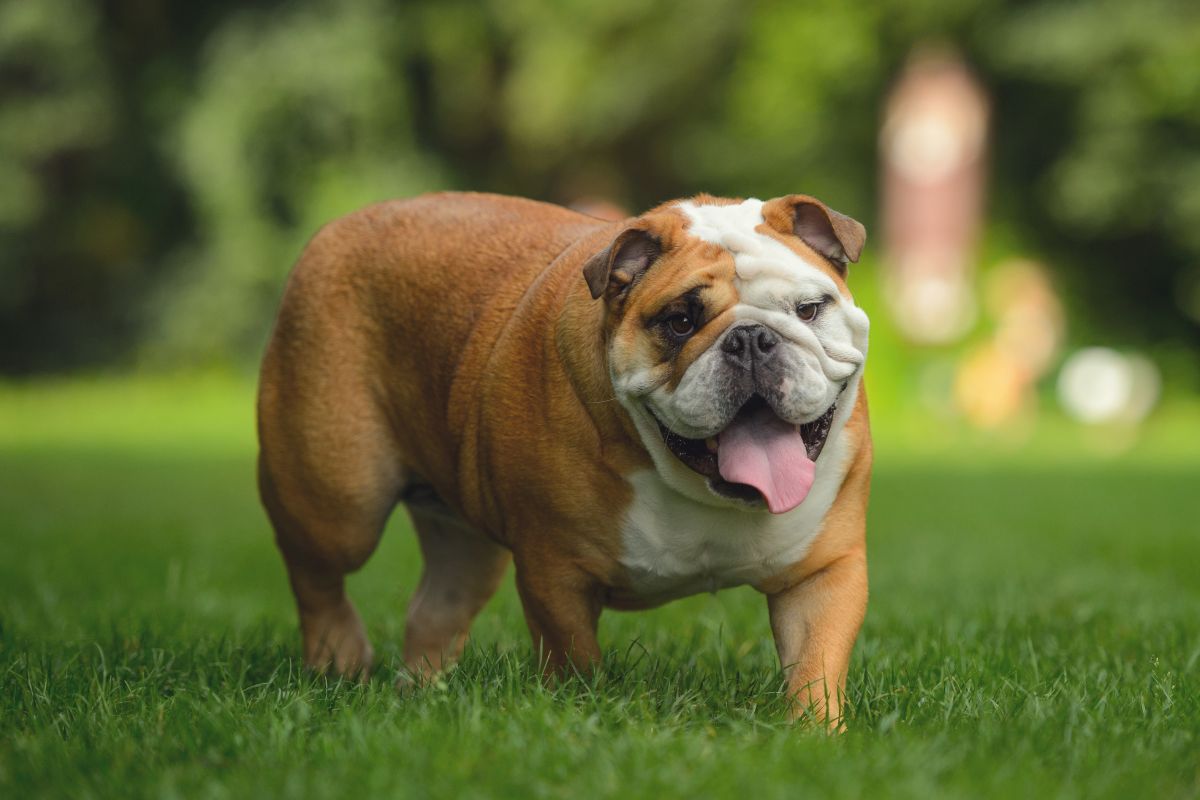
English bulldogs are big, brave and beautiful (to their owners!), and despite their muscles and broad chest, these gentle powerhouses like to be the class clown.
Personality and temperament
Loving, friendly and a little drool-y, English Bulldogs are patient and even playful with children and their families. While some may be wary of unfamiliar dogs, most are deeply loyal to their human ‘pack’ and love being part of whatever’s going on (unless it involves a long run). They’re sometimes mistaken for being lazy (aren’t we all?), but really, their short snout and restricted airways simply limit how much exercise they can handle.
Size and appearance
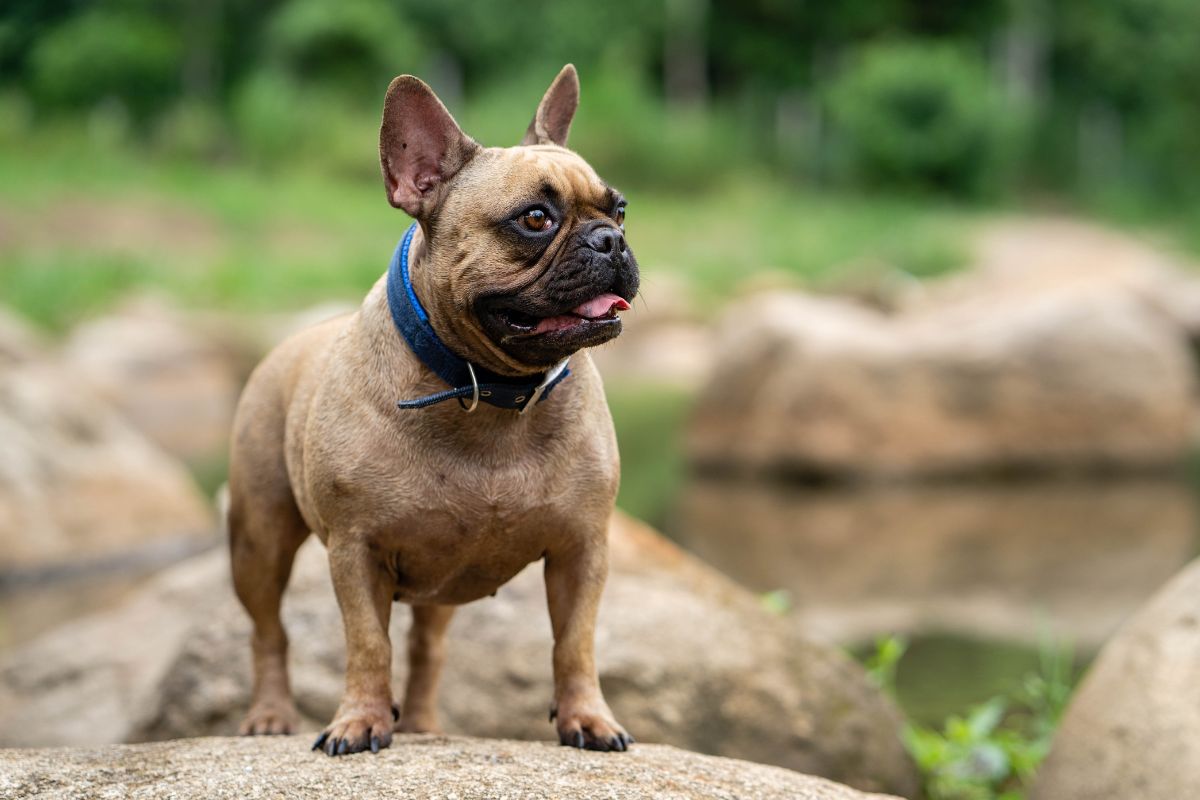
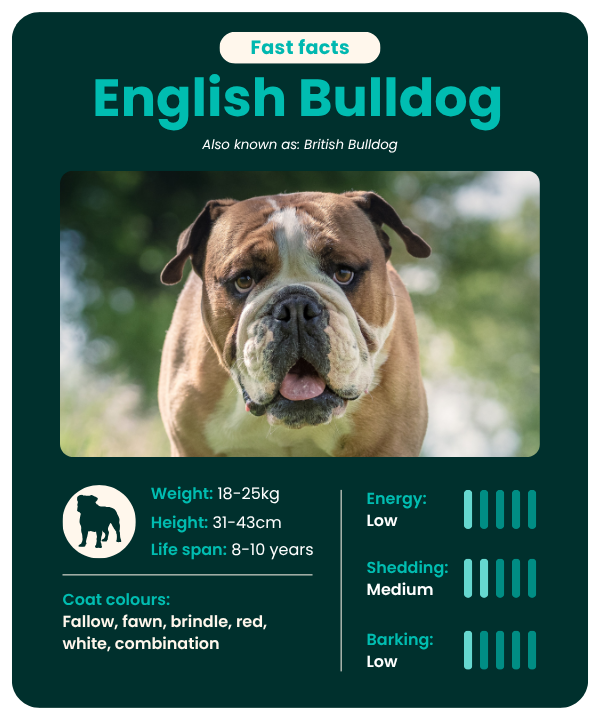
Jam-packed with muscles and framed by broad shoulders, English Bulldogs have comically large heads with folds of skin and expressive eyes that can make them look a little grumpy at times. Their large chops (jaw) take up half of their friendly face and their lower jaw (aka the drool maker) is very prominent. With a stout body, short legs and short snout that is prone to breathing issues, these medium-sized dogs can grow up to 43 cm tall. Their fur is short and easy to maintain, but cleaning is needed between the folds of their skin.
History
The history of these sturdy dogs is all in the name – as early as the 12th century they were originally bred for use in the not-to-nice sport of bull (and sometimes bear) baiting in England. Then in the 1800s when bull baiting was phased out, English Bulldogs became the dog of choice for the lower classes (and their blood sports), until a little later when they were bred to be much friendlier and less aggressive, making them ideal family pets. The shorter facial appearance appeared in around 1860 when the breed was first shown at dog shows.
Health conditions that can affect this breed
English Bulldogs are prone to quite a few health issues; many linked to their shorter snout and restricted airways. Some of the most common conditions to look out for include:
- Brachycephalic obstructive airway syndrome (BOAS) where the flattened shape of the nose and skull restricts airflow and causes breathing difficulties. Symptoms include noisy breathing, snoring, wheezing, gagging and choking, exercise intolerance and fainting. Some dogs benefit from surgery to improve their breathing
- Skin fold dermatitis (infections in their face or tail skin folds)
- Allergies and skin sensitivities
- Hip and elbow dysplasia (where the hip and elbow joints don’t form properly)
- Patellar luxation (dislocating kneecap)
- Eye problems, including dry eyes, and Cherry eye
- Dental issues, including overlapping teeth under-bite
- Heat-related illnesses (ranging from heat stress to heatstroke)
- Obesity, bulldogs love to eat
Regular vet check-ups and constant care can help manage these conditions and keep your English Bulldog healthy.
Food and exercise
Built like a tank, English Bulldogs tend to gain weight, so it’s essential to feed them a high-quality diet and limit their treats (easier said than done, we know). A slow feeder bowl can help with fast eaters and can cut down on indigestion.
Due to their breathing restrictions, most Bulldogs only need around 20 minutes a day of exercise, and generally no more than 40 minutes. This could be walks, but could also mean tug-o-war, playing fetch or gentle wrestling with their (adult) owners.
Bulldogs are particularly prone to heat stress because of their flat faces, which make it harder for them to stay cool. Exercise should be strictly avoided when the temperature rises above 25°C. Daily outings are still vital for their health and happiness, so in summer, aim for walks early in the morning or later in the evening.
Grooming and maintenance
English Bulldogs have short, smooth coats that are relatively low maintenance, however their skin folds require regular care.
- Bathe: every 4–6 weeks
- Top-coat groom: weekly brushing to remove loose hair
- Wrinkle cleaning: 2-3 times a week to prevent infection
How to groom English Bulldogs
- Fur: use a soft-bristle brush or grooming mitt weekly
- Nails: trim every 3–4 weeks
- Ears: clean weekly
- Eyes: check regularly for discharge or irritation
- Skin folds: gently clean with a damp cloth and dry thoroughly
Training and space requirements
Intelligent but stubborn, English Bulldogs aren’t the easiest dogs to train. They like clowning around and having fun, so game-based training works best. The key is being consistent and patient and starting training as early as you can.
Despite being a medium-sized dog, Bulldogs don’t need a lot of space and can be great apartment dogs if they get enough mental stimulation and exercise.
Best suited for…
Families! Playful yet gentle, English Bulldogs make great family dogs. Their loving nature will soon win family members over, but due to their specific health concerns, from being a brachycephalic dog breed, only consider this breed if you are able to dedicate time and energy into their wellbeing.